Meta Description
Discover how stage moving head lights transform live performances with cutting-edge DMX control, LED technology, and dynamic effects. Expert SEO analysis covers beam, spot, and wash fixtures for concerts, theaters, and events.
The live entertainment industry has witnessed a paradigm shift in visual storytelling, with stage moving head lights emerging as the cornerstone of modern production design. As venues worldwide upgrade from static conventional fixtures to intelligent lighting systems, understanding the nuanced capabilities of these dynamic instruments becomes paramount for lighting designers, production managers, and venue owners alike. This comprehensive analysis delves into the intricate world of automated luminaires, exploring their technological evolution, practical applications, and strategic implementation for maximum audience impact.
Understanding the Core Technology: What Makes Moving Heads Indispensable
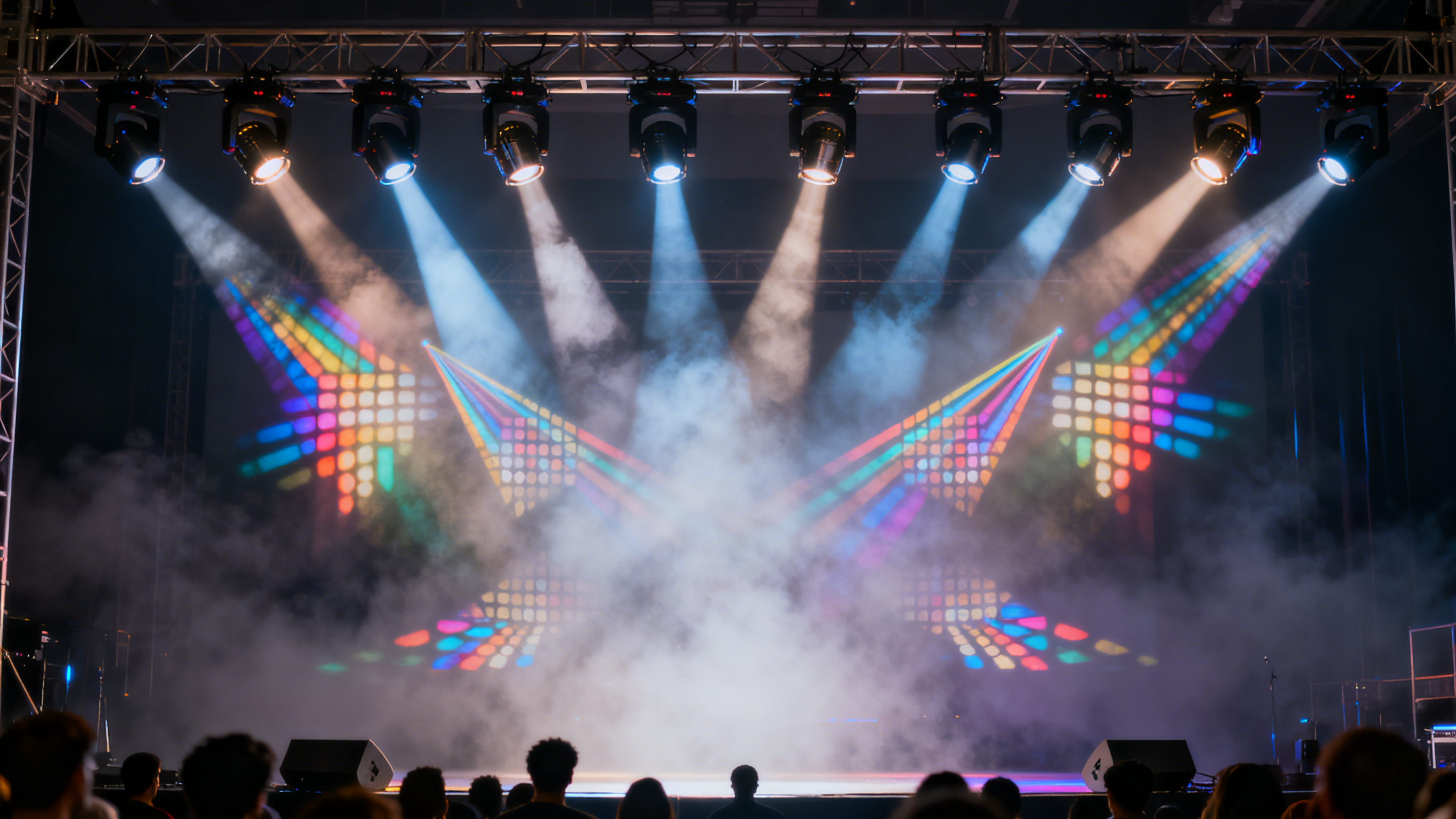
At their essence, moving head lights represent the convergence of precision engineering and digital control. Unlike traditional fixed-point fixtures, these motorized units offer pan and tilt rotation spanning 540° and 270° respectively, enabling designers to paint three-dimensional spaces with light. The integration of DMX512 protocol allows for pixel-perfect coordination across hundreds of fixtures, creating synchronized spectacles that respond in real-time to performance dynamics.
The modern moving head light fixture comprises several critical components: stepper motors for silent operation, rotating gobo wheels with interchangeable patterns, color mixing systems (CMY/RGBW), and advanced optical systems. Recent innovations in LED moving head technology have eliminated the need for lamp replacements, reducing operational costs by up to 73% while delivering superior color rendering indexes (CRI) above 95.
The Three Pillars: Beam, Spot, and Wash Fixtures
1. Beam Moving HeadsThese fixtures produce razor-sharp, narrow-angle beams (typically 2-5°) that cut through ambient light and atmospheric effects. Ideal for aerial effects in large venues, beam lights like the popular 230W Sharpy clones deliver intense luminance exceeding 200,000 lux at 20 meters. Their concentrated output makes them perfect for creating dramatic sky-tracking effects and tight mid-air gobo projections.
Image Prompt: Close-up technical photography of a beam moving head light fixture in action, showing a perfectly straight, intense white light beam piercing through dense stage fog. The beam should be clearly visible with sharp edges, creating a "lightsaber" effect. Include bokeh effects from out-of-focus stage lights in background. Technical specification overlay graphics showing beam angle (3°) and lumen output. Shot with macro lens, dramatic chiaroscuro lighting.
2. Spot Moving HeadsSpot fixtures offer versatility with variable beam angles (10-30°), hard-edge focusing, and advanced feature sets including animation wheels, iris control, and frost filters. These workhorses excel at projecting crisp gobos, creating texture on surfaces, and serving as intelligent follow-spots. The inclusion of rotating prism effects (3-facet, 8-facet, or linear) multiplies visual complexity, generating kaleidoscopic patterns that captivate audiences.
3. Wash Moving HeadsDesigned for broad, even coverage, wash lights soften edges and bathe stage areas in uniform color. With zoom ranges from 8° to 60°, these fixtures adapt from tight stage washes to wide audience blinders. The advent of RGBW and RGBA LED configurations enables infinite color mixing without mechanical color wheels, eliminating the noisy operation and maintenance headaches of older discharge lamp models.
Strategic Implementation: Maximizing ROI for Different Venues
Concert Tours and Music Festivals
For touring productions, durability and power efficiency reign supreme. Deploying IP65-rated moving head lights ensures weather resistance for outdoor festivals, while choosing fixtures with universal auto-ranging power supplies (90-240V) eliminates voltage compatibility issues across international tours. A typical front-of-house truss configuration might include 12 spot units for key lighting, 8 beam fixtures for aerial effects, and 6 wash lights for stage coverage, creating a balanced palette for any musical genre.
Theatrical Productions and Broadway Shows
Theater applications demand silent operation, precise dimming curves, and exceptional color accuracy. Here, theatrical moving head lights with motorized zoom and focus prove invaluable for quick scene transitions. The ability to program subtle position presets allows for instantaneous blackouts and scene changes without manual intervention. Modern fixtures with variable CTO (Color Temperature Orange) adjustment seamlessly blend with traditional tungsten lighting, maintaining visual continuity during hybrid installations.
Corporate Events and Worship Spaces
Corporate AV and houses of worship prioritize ease of use and reliability. All-in-one moving head wash fixtures with built-in wireless DMX receivers reduce cable clutter in aesthetically sensitive spaces. Programmable macro functions enable volunteer operators to execute complex lighting sequences via simple button presses, while RDM (Remote Device Management) capabilities facilitate remote troubleshooting, minimizing technical disruptions during critical events.
Technical Specifications: What Professionals Evaluate
When selecting fixtures, savvy engineers scrutinize several performance metrics:
-
Lumen Output vs. Power Consumption: Modern 300W LED moving heads now rival 1200W discharge lamps, delivering 15,000+ lumens while drawing 75% less power.
-
Optical Efficiency: Look for fixtures achieving 70%+ luminous efficacy, where high-quality lenses minimize light loss.
-
Motor Speed and Resolution: 16-bit pan/tilt control provides 65,536 positioning steps, enabling butter-smooth slow moves and rapid accurate snaps.
-
Gobo Wheel Capacity: Seven interchangeable rotating gobos plus open position offers creative flexibility without mid-show physical changes.
Connectivity and Control Protocols: Beyond Basic DMX
While DMX512 remains the industry standard, forward-thinking facilities implement Art-Net and sACN protocols for Ethernet-based control, supporting thousands of universes over a single network cable. This infrastructure enables advanced pixel mapping and real-time video-to-lighting translation. The emergence of POE (Power Over Ethernet) moving heads simplifies installation by delivering both power and data through CAT6 cabling, reducing installation costs by an estimated 40% in permanent installations.
Wireless DMX solutions have matured significantly, with latency now below 5ms—imperceptible to human perception. This technology proves revolutionary for historic venues where cable routing is restricted, or for temporary outdoor installations where trenching is cost-prohibitive.
Maintenance and Longevity: Protecting Your Investment
Proper maintenance extends fixture lifespan beyond 50,000 hours of LED operation. Quarterly cleaning of optical elements with isopropyl alcohol prevents lumen depreciation, while monthly inspection of motor belts and bearings identifies wear before catastrophic failure. Firmware updates, often overlooked, unlock new features and improve performance stability—top manufacturers release updates bi-annually.
Critical maintenance checklist:
-
Clean external cooling fans weekly in dusty environments
-
Calibrate pan/tilt position sensors annually
-
Test emergency stop circuits monthly
-
Document duty cycles to predict component replacement needs
Emerging Trends: AI Integration and Sustainable Design
The next generation of intelligent stage lighting incorporates machine learning algorithms that auto-program shows based on audio analysis and performer movement tracking. Fixtures with built-in accelerometers and gyroscopes self-calibrate their position, reducing setup time by 60%. Sustainable moving head lights now utilize recyclable aluminum housings and modular design philosophies, allowing individual component replacement rather than entire fixture disposal.
The push toward Li-Fi (Light Fidelity) communication promises interference-free control in RF-sensitive environments like broadcast studios and medical facilities. Meanwhile, holographic lens technology is poised to generate true 3D volumetric effects without screens, projecting floating images that interact with physical performers.
Purchasing Strategy: Balancing Budget and Performance
For facilities building their inventory, a phased approach proves most economical. Start with versatile hybrid moving head lights combining spot and wash capabilities, then specialize as budget allows. Consider total cost of ownership: a $2,000 LED fixture with 10-year lifespan versus a $800 discharge lamp model requiring $200 annual lamp replacements and higher power consumption.
Financing tip: Many manufacturers offer trade-in programs for legacy fixtures, providing up to 30% credit toward new LED models. Leasing options with maintenance included appeal to venues with unpredictable cash flow, converting capital expenditure into operational expense.
The evolution of stage moving head lights from novelties to necessities reflects the entertainment industry's insatiable appetite for immersive experiences. As LED efficiency continues improving and AI-driven control democratizes complex programming, these fixtures will become even more accessible to smaller venues and independent creators. The key to successful implementation lies not in acquiring the most expensive equipment, but in understanding the specific narrative and operational requirements of your productions.
By embracing RDM-enabled maintenance, wireless DMX flexibility, and sustainable design principles, venues can create spectacular visual environments that captivate audiences while maintaining fiscal responsibility. The future of stage lighting isn't just brighter—it's smarter, greener, and more creatively empowering than ever before.