Meta Description: Discover how modern theater audience lights transform the theatrical experience. Learn about LED house lighting systems, auditorium illumination design, and safety compliance for performing arts venues.
Introduction: Why Audience Lighting Matters More Than Ever
The magic of theater extends far beyond the proscenium arch. While spotlights and stage washes command attention, theater audience lights—often called house lights or auditorium illumination—play an equally crucial role in shaping the complete theatrical experience. These unsung heroes of venue design have undergone a revolutionary transformation in recent years, evolving from simple functional necessities to sophisticated architectural elements that enhance safety, comfort, and aesthetic immersion.
As venues reopen and reinvent themselves for contemporary audiences in 2026, the strategic implementation of auditorium lighting design has become a critical differentiator for theaters, opera houses, and performing arts centers worldwide. Modern LED audience lighting systems do more than illuminate seating areas; they create atmosphere, ensure emergency egress compliance, and seamlessly transition patrons from lobby to seat to performance.
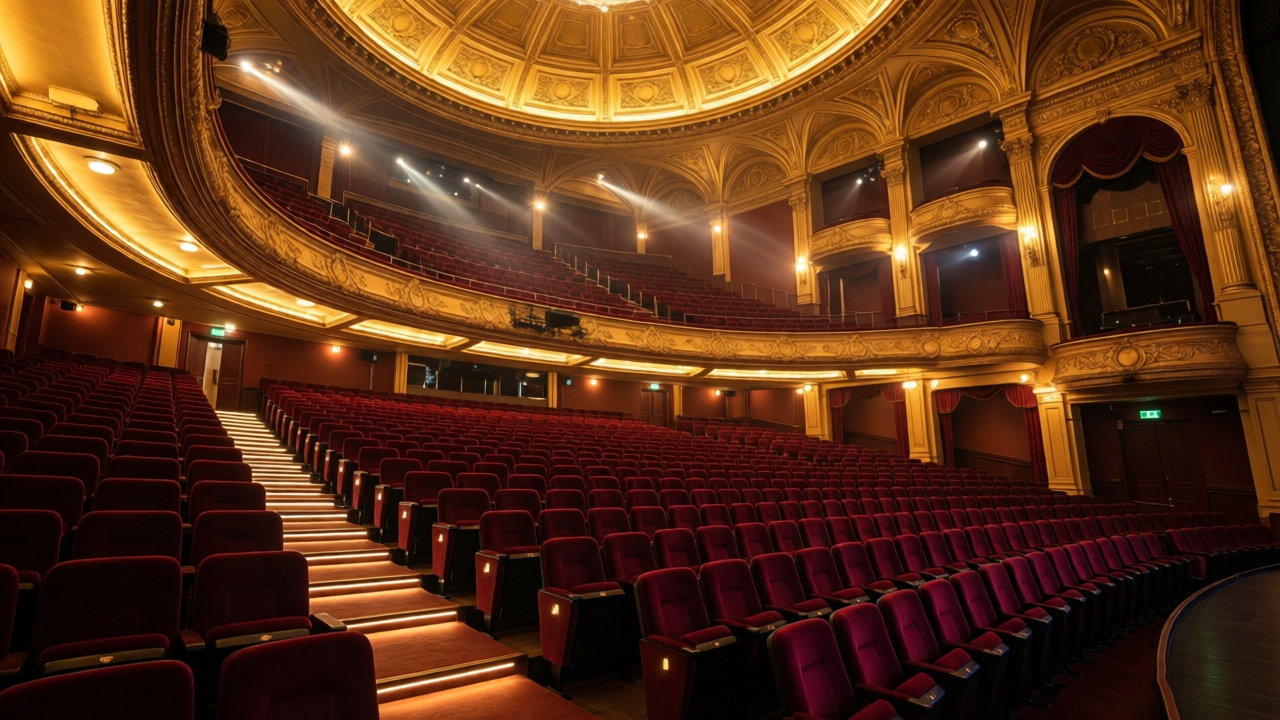
Whether you're retrofitting a historic 1920s picture palace or designing a state-of-the-art black box theater, understanding the nuances of theater seating illumination is essential for creating spaces that honor both artistic vision and practical safety requirements.
Defining Theater Audience Lights: Function Meets Form
What Are House Lights in Theater Terminology?
House lights refer to the complete lighting system illuminating the audience chamber (the "house") rather than the performance area. This encompasses:
-
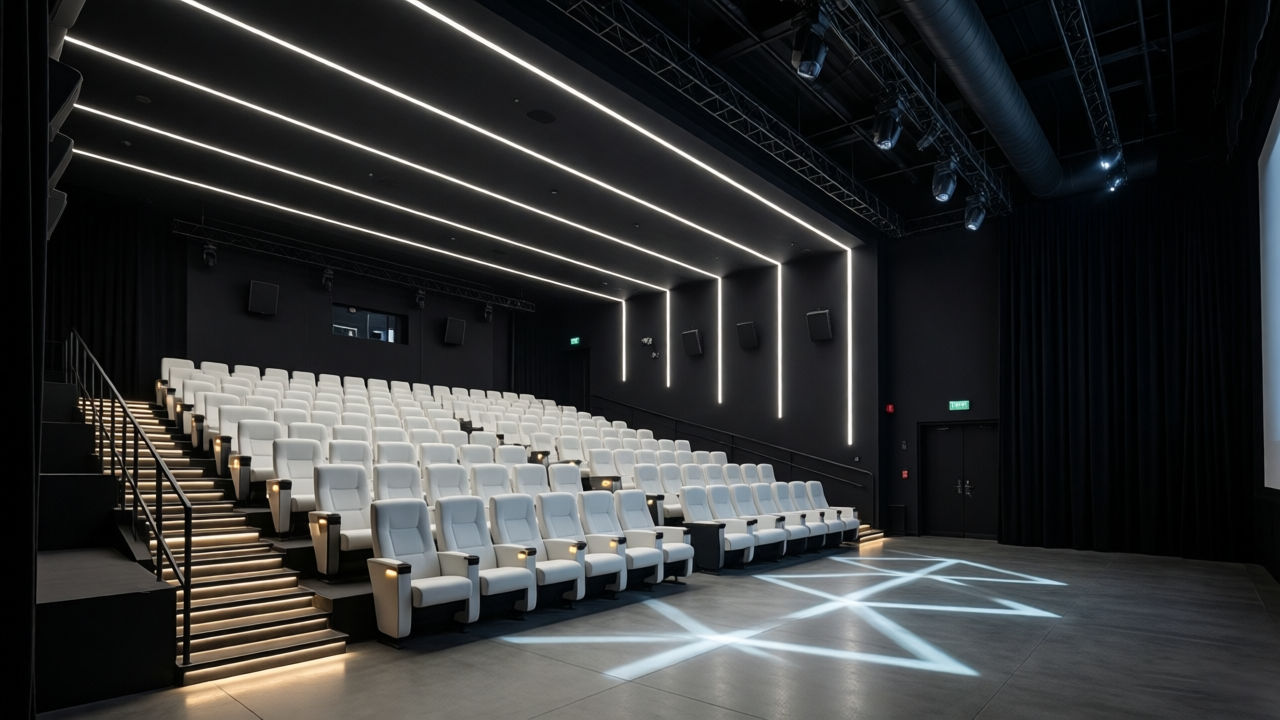
General illumination fixtures mounted on ceilings, soffits, or architectural coves
-
Aisle lighting integrated into step edges, seat backs, or floor-mounted bollards
-
Task lighting for reading programs and locating seat numbers
-
Emergency lighting systems ensuring safe evacuation during power failures
-
Accent lighting highlighting architectural features, artwork, or decorative elements
Unlike stage lighting, which prioritizes dramatic effect, dimmable house lights must balance multiple contradictory requirements: providing sufficient illumination for safe navigation while maintaining atmosphere, eliminating glare that distracts from the performance, and offering smooth transitional fading that guides audience attention from social space to artistic space.
The Psychology of Auditorium Illumination
Research in environmental psychology reveals that audience sightlines lighting significantly impacts patron satisfaction and perceived value. Warm color temperatures (2700K-3000K) create intimacy and comfort, while proper vertical illumination on faces fosters social connection during intermissions. Conversely, poorly designed house lighting creates harsh shadows, causes eye strain during program reading, and interrupts the immersive bubble that separates theatrical reality from everyday life.
Technical Standards and Safety Compliance
Illumination Level Requirements
Professional architectural theater lighting must comply with stringent international standards:
Pre-Show and Intermission Levels: 10-20 foot-candles (100-200 lux) measured at seat level, providing adequate visibility for program reading and conversation without destroying atmospheric anticipation.
Performance Levels: 0.5-2 foot-candles (5-20 lux) during performances, sufficient for emergency egress recognition without distracting from stage action or creating conflicting visual focal points.
Emergency Egress: Minimum 1 foot-candle (10 lux) along primary exit paths maintained for 90 minutes during power failures, as mandated by NFPA 101 Life Safety Code and local building regulations.
Color Temperature and Color Rendering
Modern house lighting control systems prioritize LED sources with:
-
Color Rendering Index (CRI) of 90+ to ensure accurate skin tone rendering and fabric color recognition during intermission socializing
-
Tunable white capabilities ranging from 2200K (candlelight ambiance) to 4000K (daylight clarity) allowing venue operators to match lighting to event type—warm for classical theater, cooler for corporate presentations
-
Flicker-free dimming below 1% to prevent eye strain and discomfort during extended dimmed periods
The LED Revolution in Theater Seating Illumination
Energy Efficiency and Operational Cost Reduction
The transition to LED audience lighting represents the most significant technological shift in venue operations since the advent of electric light itself. Traditional incandescent house light systems consumed enormous energy—often 30-50% of a theater's total electrical load—while generating dangerous heat levels in ceiling cavities and requiring constant lamp replacement.
Modern LED fixtures offer:
-
80-90% energy reduction compared to tungsten halogen equivalents
-
50,000-hour lamp life (compared to 2,000 hours for incandescent), eliminating disruptive relamping during performance weeks
-
Minimal heat emission reducing HVAC loads and fire risks in historic venues with wooden structural elements
-
Instant on/off capability eliminating warm-up delays and allowing precise intermission timing
Networked Control and Automation
Contemporary theater lighting safety systems integrate sophisticated control networks:
DMX512 and DALI Protocols: Enable centralized dimming curves, scene presets for different event types (symphony vs. rock concert vs. film screening), and integration with building management systems.
Daylight Harvesting: Sensors adjust house light levels based on natural light infiltration during matinee performances, maintaining consistent illumination while maximizing energy savings.
Occupancy-Based Dimming: Advanced systems detect when sections are occupied, automatically adjusting aisle lighting and reading light levels while maintaining safety illumination in empty sections.
Design Strategies for Optimal Audience Experience
Architectural Integration Techniques
The most successful auditorium lighting design treats fixtures as architectural elements rather than afterthoughts:
Cove Lighting: Indirect illumination washing ceiling planes creates spaciousness and eliminates direct glare. LED strip lighting concealed in architectural moldings provides uniform ambient levels while preserving historic decorative plasterwork in renovated venues.
Seat-Back Illumination: Individual reading lights integrated into seat backs offer personalized task lighting without disturbing neighboring patrons. Modern OLED and mini-LED technology allows ultra-thin profiles that don't compromise seat comfort or sightlines.
Step and Aisle Definition: Linear LED profiles embedded in stair nosings provide critical safety illumination while creating elegant visual rhythms that guide patron flow. Photometric design must balance visibility with preventing "runway" effects that draw focus from the stage.
Glare Control and Visual Comfort
Preventing glare is paramount in dimmable house lights design:
-
Cutoff angles must exceed 45 degrees to prevent direct lamp visibility from seated positions
-
Baffled fixtures and louvers obscure light sources while maintaining output efficiency
-
Matte finishes on reflective surfaces reduce specular highlights that compete with stage lighting
-
Graduated dimming curves ensure smooth transitions that don't create disorienting step-changes during fade-to-black sequences
Historic Venue Preservation vs. Modern Requirements
Navigating Heritage Constraints
Theaters built before 1950 present unique challenges for house lights theater retrofits. Listing in historic registers often prohibits visible modifications to ornamental ceilings, walls, or seating.
Innovative solutions include:
-
Fiber optic delivery systems that allow remote light source placement while maintaining period-appropriate fixture appearances
-
Magnetic attachment systems for temporary LED upgrades during performance seasons, removable without damaging historic fabric
-
Wireless control retrofits that eliminate conduit installation in protected plasterwork
-
Low-voltage LED strips concealed behind original valances and cornices, invisible to patrons but providing code-compliant illumination levels
Accessibility and Inclusion Considerations
Modern theater seating illumination must support patrons with diverse abilities:
-
High-contrast step marking assists patrons with low vision in navigating tiered seating
-
Uniform illumination across accessible seating areas ensures wheelchair users can safely maneuver companion spaces
-
Non-photometric flicker rates prevent triggering photosensitive epilepsy responses
-
Program lighting at seats accommodates aging populations without stigmatizing special accommodation areas
Emergency Systems and Life Safety Integration
Code Compliance and Redundancy
Theater lighting safety encompasses far more than aesthetic considerations. Integrated emergency systems must provide:
Central Battery Inverters: Maintain emergency illumination for 90 minutes during grid failures, with automatic testing protocols that ensure battery health without manual intervention.
Exit Signage Integration: LED exit signs coordinate with house lighting dimming curves, increasing to full brightness during emergencies while maintaining minimum 75-foot viewing distances required by fire codes.
Path Marking Systems: Photoluminescent materials and LED floor lighting provide redundant egress guidance independent of electrical systems, crucial in smoke-filled evacuation scenarios.
The Future of House Lighting: Trends for 2026 and Beyond
Human-Centric Lighting and Circadian Rhythms
Emerging house lighting control systems incorporate circadian lighting principles:
Tunable white LED systems shift color temperature throughout the day—energizing cool whites for morning tech rehearsals, transitioning to warm amber for evening performances. Research suggests this supports both patron alertness and staff wellbeing during long technical sessions.
Interactive and Responsive Environments
Experimental venues are implementing audience sightlines lighting that responds to performance content:
-
Subtle color shifts in house lights that mirror stage moods, creating immersive environmental coherence
-
Motion-activated aisle lighting that illuminates pathways only when patrons move, reducing distraction during intimate performance moments
-
Smartphone integration allowing patrons to control personal reading light levels via venue apps, providing customization without disturbing neighbors
Sustainable Design and Net-Zero Venues
As performing arts centers commit to carbon neutrality, architectural theater lighting systems incorporate:
-
Daylight-responsive controls maximizing natural illumination during load-in and technical rehearsals
-
Solar battery storage maintaining emergency lighting off-grid
-
Cradle-to-cradle fixture design with recyclable components and modular upgrade pathways
Professional Specification Guidelines
When selecting theater audience lights for new construction or renovation, consider:
Photometric Analysis: Computer modeling (AGi32 or Dialux) should simulate illumination levels from every seat, ensuring uniformity ratios don't exceed 4:1 (brightest to darkest point).
Acoustic Impact: Ballasts and drivers must meet NC-30 noise criteria—silent operation is essential during unamplified acoustic performances.
Maintenance Access: Catwalks and ceiling hatches must accommodate fixture access without disrupting performances or requiring scaffolding during run weeks.
Future-Proofing: Specify fixtures with field-upgradeable LED modules and programmable drivers to accommodate evolving technology without full fixture replacement.
Lighting as Silent Storytelling
The evolution of LED audience lighting reflects the broader transformation of theater from simple entertainment to immersive, multi-sensory experience. When executed with precision, house lighting operates as invisible infrastructure—noticed only when absent or poorly implemented.
For venue managers, lighting designers, and architects, investing in sophisticated auditorium lighting design delivers returns in safety compliance, operational efficiency, and patron satisfaction. As LED technology continues advancing and control systems become increasingly intelligent, the boundary between "house" and "stage" lighting grows more permeable, suggesting a future where the entire venue becomes a canvas for environmental storytelling.
The theaters that thrive in coming decades will be those recognizing that the show begins the moment patrons enter the auditorium—and that theater seating illumination sets the stage for everything that follows.